
Reaching Children in Crisis Through Remote Early Education
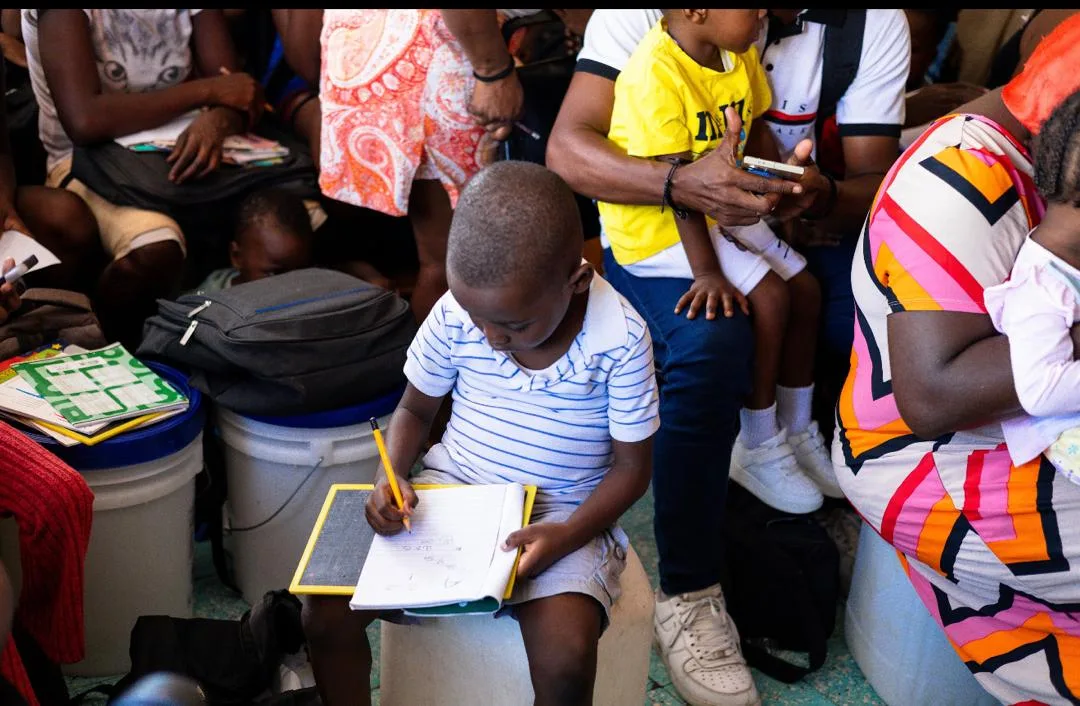
For children living in Haiti’s internally displaced communities, access to education has become increasingly fragile. Insecurity, school closures, and unstable living conditions have made it nearly impossible for many young children to attend school consistently, interrupting not only learning but also critical early development.
GHESKIO’s Remote Early Learning Program (RELP) was designed to respond to this reality. Rather than waiting for stability to return, the program asked a different question: how can learning continue, even in crisis?
The answer was both simple and innovative. RELP brought together teachers, parents, and accessible technology—primarily smartphones—to create a model of remote early childhood education adapted to life in displacement camps. Teachers were trained in distance-learning methods for young children, and parents were organized into small learning groups that participated in regular sessions to learn how to guide their children’s education at home.
Digitized lesson plans, delivered through a mobile platform developed by RETEL using local educational manuals, allowed parents to actively engage in their children’s learning. With school kits and materials provided, families were able to implement structured activities tailored to the developmental needs of children ages three to five. In parallel, children attending GHESKIO’s Prince Albert of Monaco School (EPAM) participated in a hybrid model—continuing their education remotely when in-person learning was disrupted.
The approach was not without challenges. Limited access to electricity, inconsistent connectivity, and the need to quickly build digital literacy among parents and teachers all required adaptation. Yet these constraints also shaped the program, reinforcing the importance of flexibility, strong community support, and practical solutions grounded in local realities.
Early findings are encouraging. Children in the program maintained—or regained—key developmental skills despite prolonged disruption. Just as importantly, the program strengthened the connection between parents and children. Many parents reported a sense of pride and confidence in their ability to support their child’s learning, while teachers developed new skills in remote pedagogy that can be applied beyond the current crisis.
The RELP experience demonstrates that education does not have to stop in the face of instability. With the right support, families can become active partners in learning, and children can continue to grow—even in the most difficult conditions.
In a context where access to school is uncertain, this model offers a clear insight: learning can adapt, and with it, so can opportunity.