

The State of the Humanitarian Crisis
Haiti’s crisis has not paused. In late August, gunmen attacked the mountain community of Kenscoff, killing 47 people, wounding dozens more, and abducting over 50 residents — one of the deadliest single attacks the country has seen this year. It was not an isolated incident. Armed groups now control an estimated 85 to 90 percent of the greater Port-au-Prince metropolitan area, and their reach continues to expand into departments once considered safer ground.
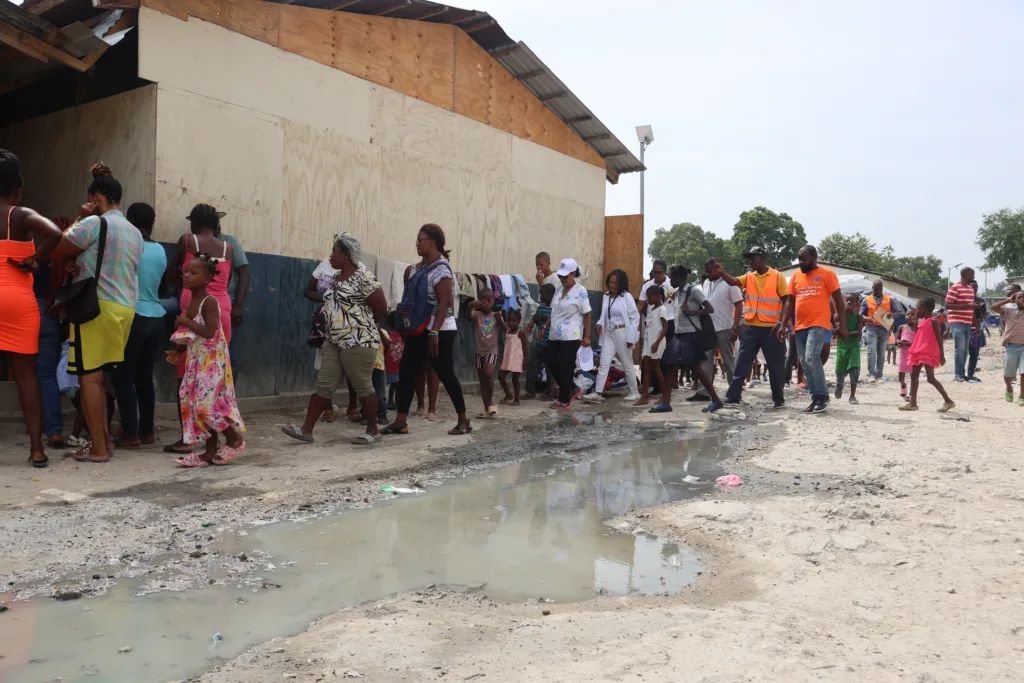
The humanitarian toll is difficult to overstate. Roughly 1.5 million people are internally displaced, more than half of them children. Nearly 6 million people — over half the country’s population — face acute food insecurity, and cholera has resurfaced in several communities. In many neighborhoods, hospitals and maternity wards have been forced to close under the threat of violence, leaving families with nowhere to turn for even basic care.
A UN-backed international security force deployed earlier this year to help stabilize the country, but its mandate is set to expire this month, and it has yet to reach its intended strength — leaving Haiti’s near-term future genuinely uncertain.
Displacement & Food Security
- ~1.5 million people internally displaced, including 751,000 children (UNICEF, updated August 20, 2026, covering January–June 2026)
- 6.4 million people — more than half of Haiti’s population — will need emergency humanitarian assistance in 2026, up 6.7% from 6 million in 2025 (OCHA’s 2026 Humanitarian Needs and Response Plan)
- 5.8 million people experienced acute food insecurity in the first half of 2026; separately, OCHA’s most current figure cites 1.9 million people at emergency levels of acute food insecurity — the more severe classification
- Displacement patterns have shifted: as of late 2025, 69% of new displacement was occurring outside Port-au-Prince, particularly in the Centre and Artibonite departments — meaning the crisis is actively spreading beyond the capital, not just intensifying within it
Violence & Security
- Armed gangs, consolidated under the “Viv Ansanm” coalition, control an estimated 85–90% of the Port-au-Prince metropolitan area, and have expanded into the Artibonite, Centre, and Northwest departments
- Haiti reportedly has the highest homicide rate in the world, according to some analysts (Human Rights Watch)
- A BINUH flash report (August 6, 2026) described a resurgence of armed violence in Port-au-Prince between March 6 and July 31, at levels not seen in over a year
- In that same window (March–July 2026), 613 people were killed and 375 injured in just two areas — Plaine du Cul-de-Sac and Cité Soleil — with 18,000+ newly displaced from that violence alone
- The August 23 Kenscoff attack killed 47 people, injured dozens, and left more than 50 abducted
- A private military contractor — a US company, Vectus Global — is now operating in Haiti, hired directly by the Haitian government. UN and human rights reporting has flagged concerning civilian casualty rates from security-force and PMC operations, including some resulting from explosive drone use
Health
- 442 suspected cholera cases, including 2 deaths, reported as of the August 2026 UNICEF update
- Insecurity has forced the closure of numerous health facilities, including maternity wards and operating rooms, and severely limited access to emergency obstetric care — directly relevant context for exactly the kind of work GHESKIO is doing
Gender-Based Violence
- 76% of victims were women; 14% were girls under 18
- 7,472 GBV incidents reported between January and September 2025, of which 56% were sexual violence
- Of those sexual violence cases, 65% were collective (gang) rapes